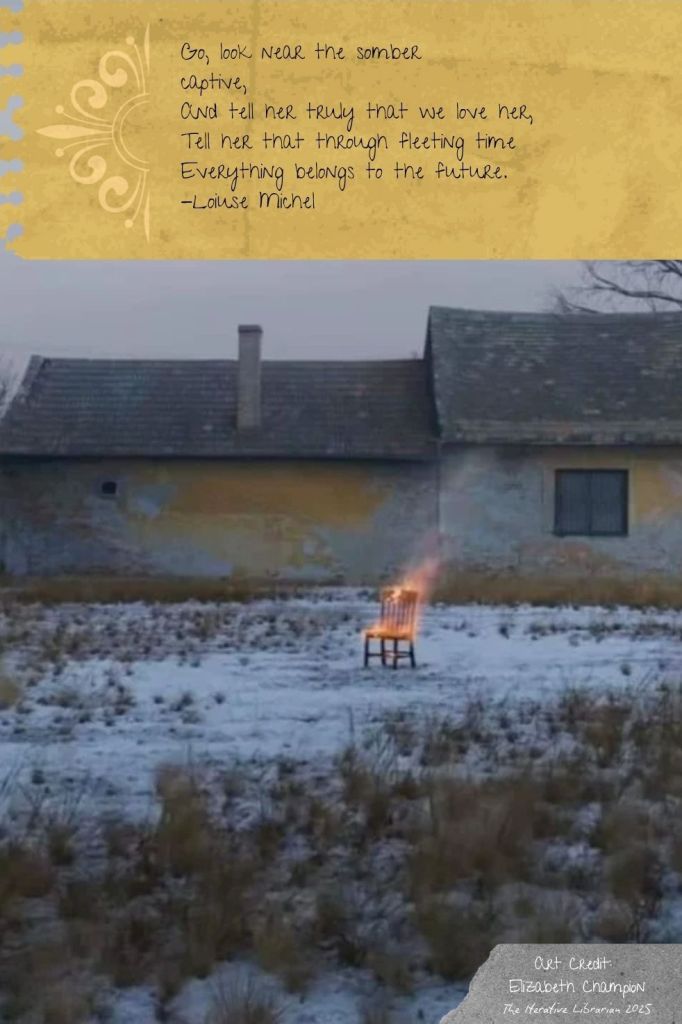
I do not know how or when I came across Champion’s critically engaging image; this fragment of Louise Michel’s poem, Red Carnation, or how my mind created this visual collaboration. I never really do know. My process is relatively inexplicable–spontaneous, instinctual. I truly live Out with Lanterns, exploring the landscape of my poetic memory (M. Kundera), hunting for treasures and tucking them into my pocket, as I make my way along.
Collage-making serves as a critical tool for breaking down my defense mechanisms and supporting a praxis of self-reflection, admission, recognition, and if I am lucky–emotional release.
Once it comes together, the wheels begin to turn. As I have written, in an earlier post: “Art is the antidote to my chronic intellectualizing. When I make collage (which I have been making for nearly 35 years), my third eye takes the lead. As the shoreline is drawn along the waving sea, so my mind’s eye is drawn along my perceptual flow. As I work, images and words interact, impact, and inform each other. Then my feelings shake out. This is how I connect the dots.”
August 1975
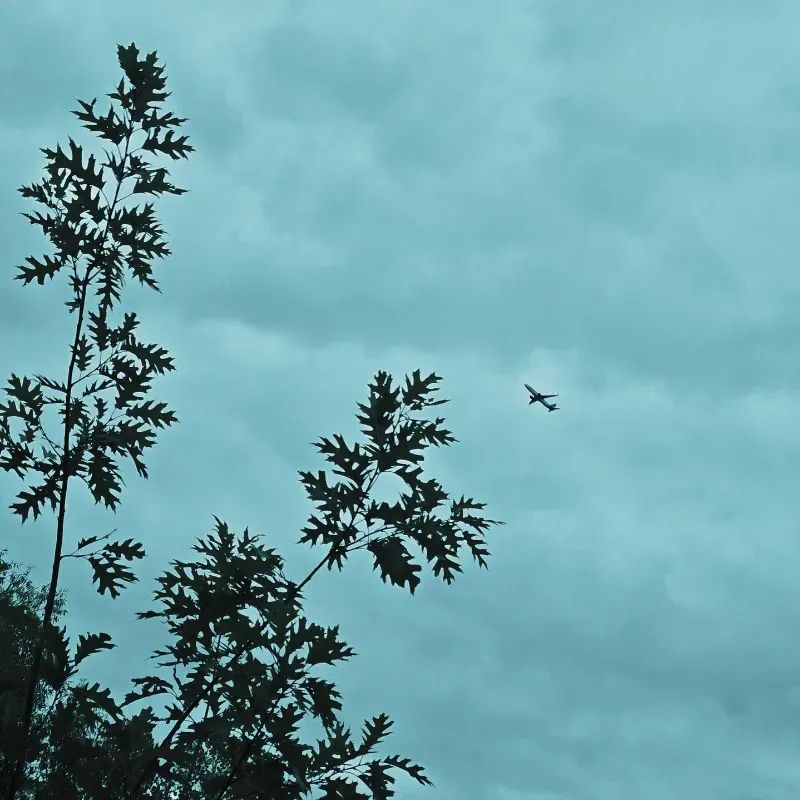
Fifty years ago, in August 1975, my father completed his journey from the Midwest to the Netherlands where he had been invited to work in his field–cultural anthropology–under the auspices of a well-known Dutch university. As he stepped onto Dutch soil, he stepped into his future–relegating his ex-wife (who was his colleague in many respects), and three young girls to fare on their own in his past.
I have no memory of my parents living together, or when they separated. When my parents split, my father took an apartment near the university (only an hour away from us) where he taught, and my youngest sister and I would go and visit him periodically. We loved the excitement of visiting him, despite the difficulty of transitioning between our mother’s world and his world. One day, after only maybe a year, the visits stopped.
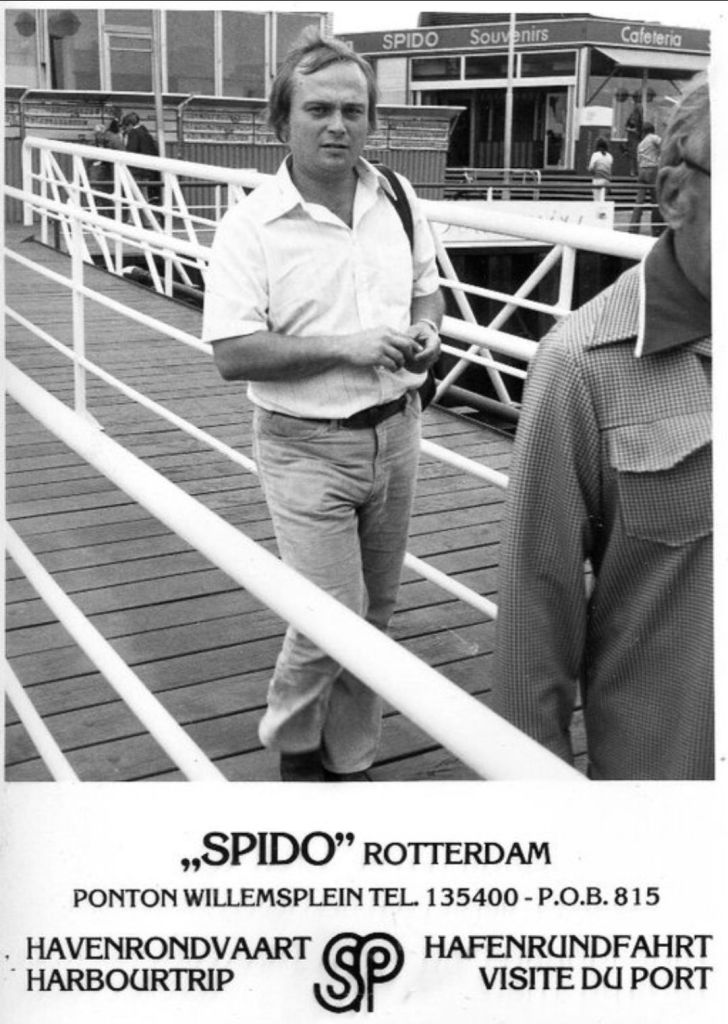
I assume we were told that our father no longer lived in the apartment, that he had moved overseas. I don’t recall, but I have vivid memories of my sister and I being obsessed with airplanes flying over our heads. We would run along the ground beneath their distant roar–waving and hollering desperately, “Hi, Daddy!” We survived on postcards from Dordrecht, Rotterdam, Amsterdam, Brussels, Antwerp, or Paris, inscribed with his now so very familiar diagonal scrawl, sending his love across the ocean—Love, Daddy.
Traveling Alone
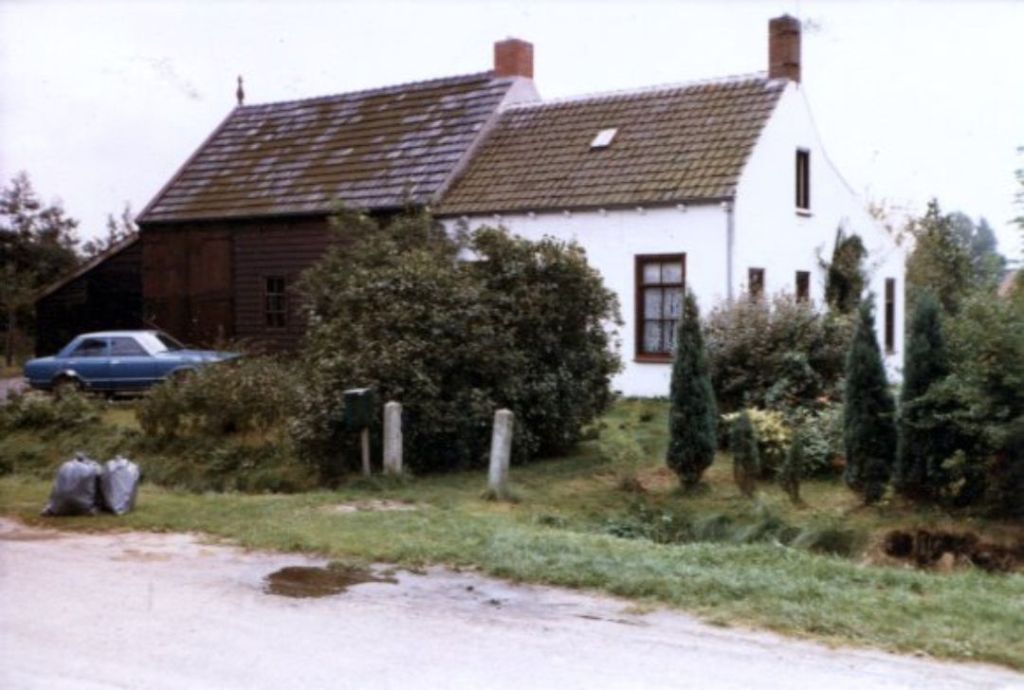
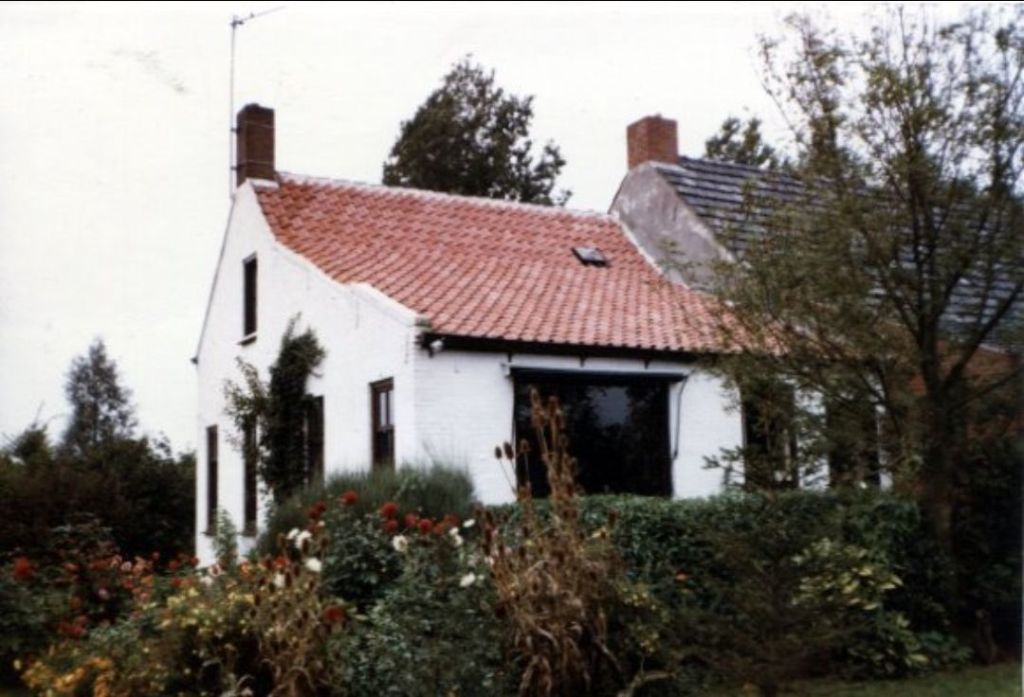
When I was 14, I ventured to the Netherlands to live with my father. I boarded an airplane to my future, leaving my mother, stepfather, and sisters in my past. I traveled alone from Minneapolis to Helsinki (changing planes at JFK) where I met my (now late) father and his partner, and then traveled with them to their home in Zeeland, on the island of Tholen, in the village of Poortvliet.

Djarums and Nina Hagen
Poortvliet is where I discovered Djarum Kretek cigarettes (Think: colonialism.); the only cigarettes I ever enjoyed–and Neue Deutsche Welle, punk rock Godmother, Nina Hagen. I vividly recall finding my father sitting in the evening dimness, cross-legged on the floor, leaning against the wall, eyes closed and smoking a fat, crackling Djarum. Hagen’s soaring vocals flooding the living room. Hagen, an opera prodigy by age nine, was renowned for her wild, fierce sound underscored by an inimitable ability to easily scale four octaves. Hagen’s haunting Naturträne (1978), an exquisite expression of the human heart seeking solace in the natural world, may have been the song playing that afternoon.
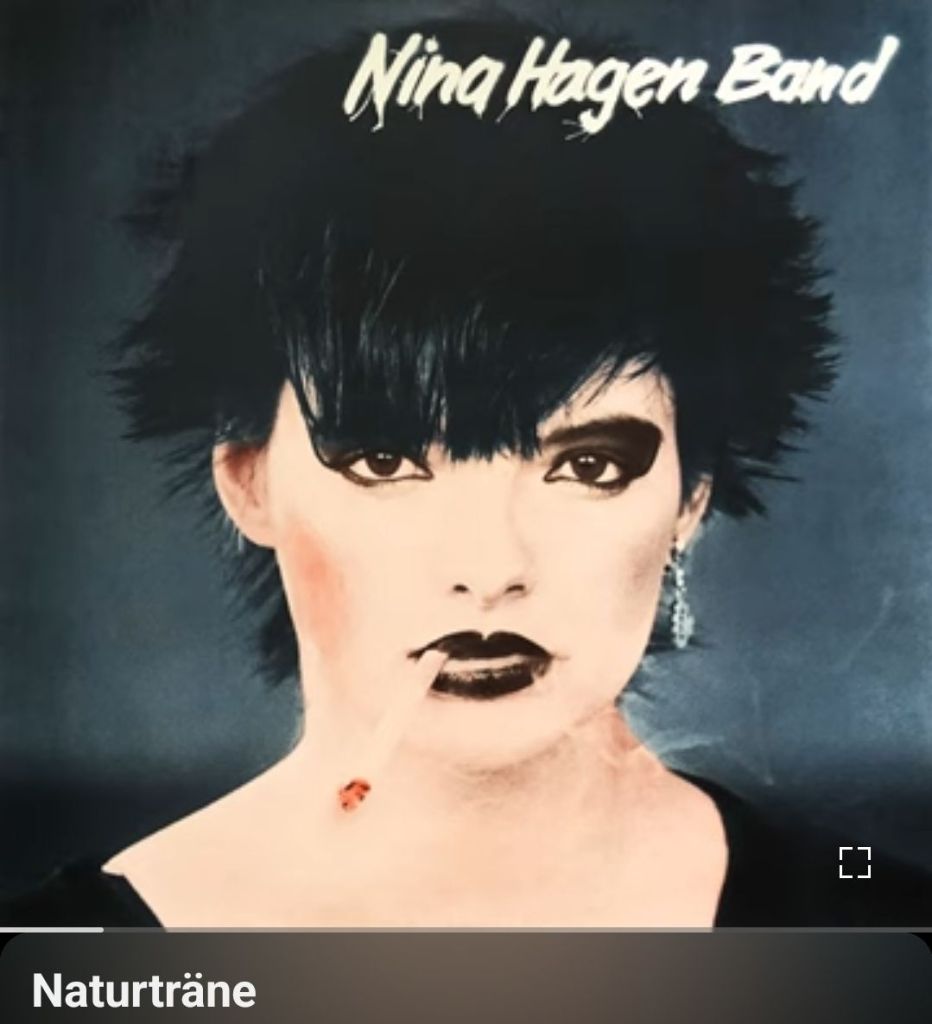
Naturträne (1978)
Opened wide my window shows
Sparrow-clouds sky-aflutter
Freezing nose, the wind blows
Scattered exhaust pipes rattle ’n sputter
Oh, the sun is going down
Red, with gold, it is foretold
I look down upon a ghost town
An old acquaintance I behold
Abrupt! Of a sudden my heart feels heavy
The sight of twilight birds on the wing
Sends my gaze soaring heavenwards
My soul is sore, and how beautiful it is
Evening still-life, silent city
Soul a-swelling, tears a-running
And so all conspires to make me weary
And I just cannot keep from sobbing
Off’nes Fenster präsentiert
Spatzenwolken himmelflattern
Wind bläst, meine Nase friert
Und paar Auspuffrohre knattern
Ach, da geht die Sonne unter
Rot, mit Gold, so muss das sein
Seh ich auf die Strasse runter
Fällt mir mein Bekannter ein
Prompt wird mir’s jetzt schwer ums Herz
Ich brauch’ nur Vögel flattern sehen
Und fliegt mein Blick dann himmelwärts
Tut auch die Seele weh, wie schön
Natur am Abend, stille Stadt
Verknacksen Seele, Tränen rennen
Das alles macht einen mächtig matt
Und ich tu’ einfach weiterflennen
Translation by Richard Jonathan
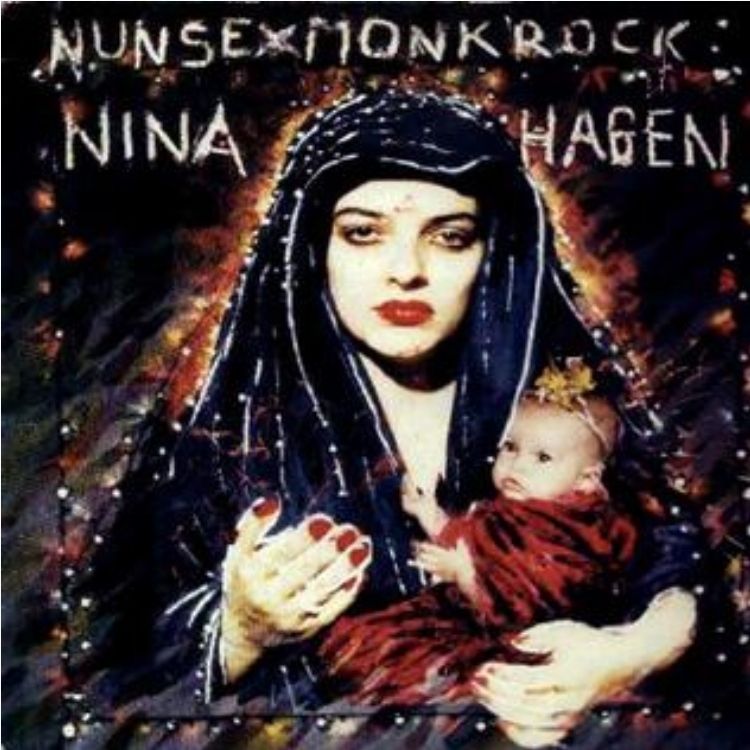
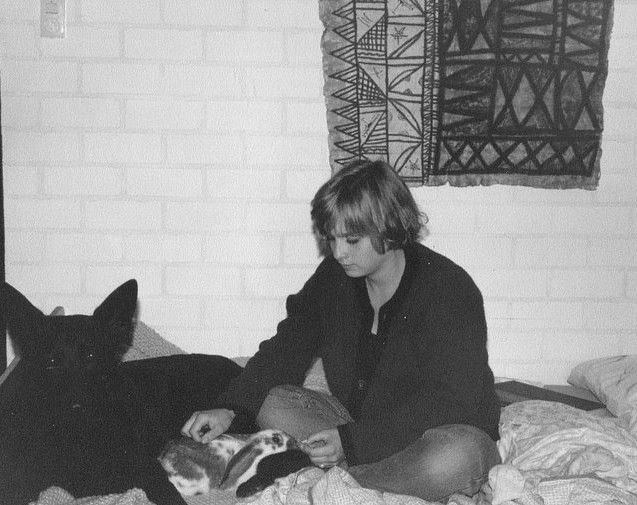
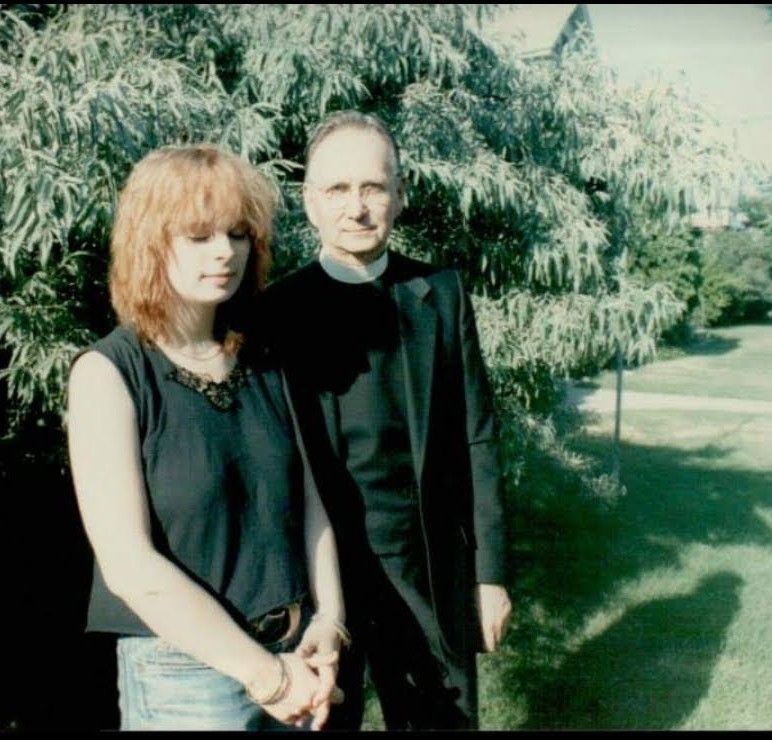
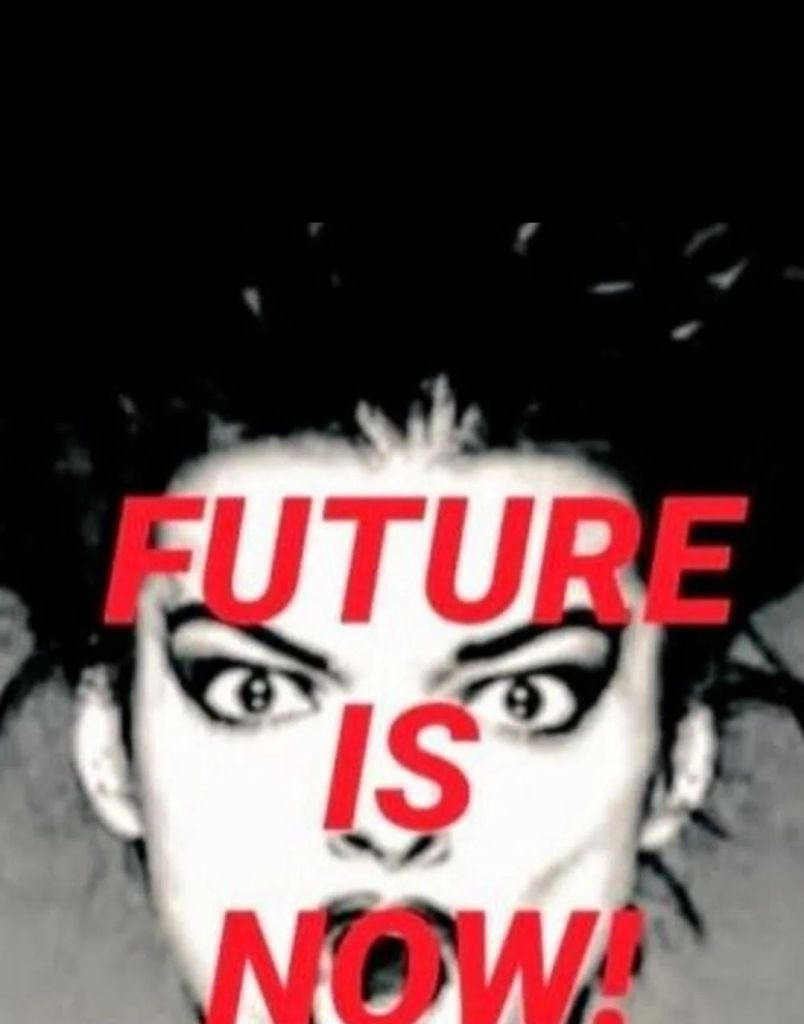
Hagen blew my mind and stirred up my banshee-teen-energy. In my room, I mimicked my father–I cranked up my stereo, lay back on my bed, closed my eyes–inviting Hagen’s impeccable, transgressive coloratura of Future is Now (NUNSEXMONKROCK, 1982) to enliven and alter my brain chemistry forever.
Future is Now
1968, is over (it’s over)
1981, is over… future is now!
It’s really gonna be a better world
So many people try again and again and again to change
Lieber Gott mach mich Fromm, dass ich in der himmel komm
(La la la la)
Ein zwei drei vier funf sechs sieben
Love + Life + Drive + Frieden
One two three four five six seven
Love + Life + Drive in Heaven
1968, is over (its over)
1981, its over. Future is Now!
My love for you was bigger than my love for me Cheri you see
Now I am free, I found the key! .And I love everybody
Just gonna free everybody
Ein zwei drei vier funf sechs sieben
Love + Life + Drive + Frieden
One two three four five six seven
Love + Life + Drive in Heaven
1968, is over (its over)
1981, its over. Future is Now!
Sklare wer wird dich befreien?
Sklaren werden dich befreien!
Erste Vergesst nicht kommt das fressen
Zweite kommt der liebesaht
Dritte der konsum nicht vergessen
Vierte saufen bis es knackt FROST MAHLZEIT
Ein zwei drei vier funf sechs sieben
Love + Life + Drive + Frieden
One two three four five six seven
Love + Life + Drive in Heaven
1968, is over (its over)
1981, its over. Future is Now!
A better world
Worth noting–I was born in 1969, the summer of love, and traveled to Europe in 1983. I found myself uniquely situated in proximity to both zeitgeists referenced. In 2025, tragically, it’s far from over, but the future is still now. I choose to believe it really can still be a better world, especially if we all get to work–together–in solidarity–with each other.
See you shortly
After my father died, I found a note he had written–again–at an angle. Perhaps the angled script was an expression of the way he lived–in a hurry–a hurry to experience the moment: Carpe diem. He was often up late, but then often up early, before everyone else. He would have already gone to the shops, picked up supplies for breakfast, interacted with strangers or gone swimming. Up early, gone swimming, see you shortly.
As much as it harmed me that he left–I survived. I believe, it is true, that he hated leaving me and my sister behind–and yet he did. He went swimming without us. Years later, when I called to say I was coming to Europe to see him—he couldn’t believe it.
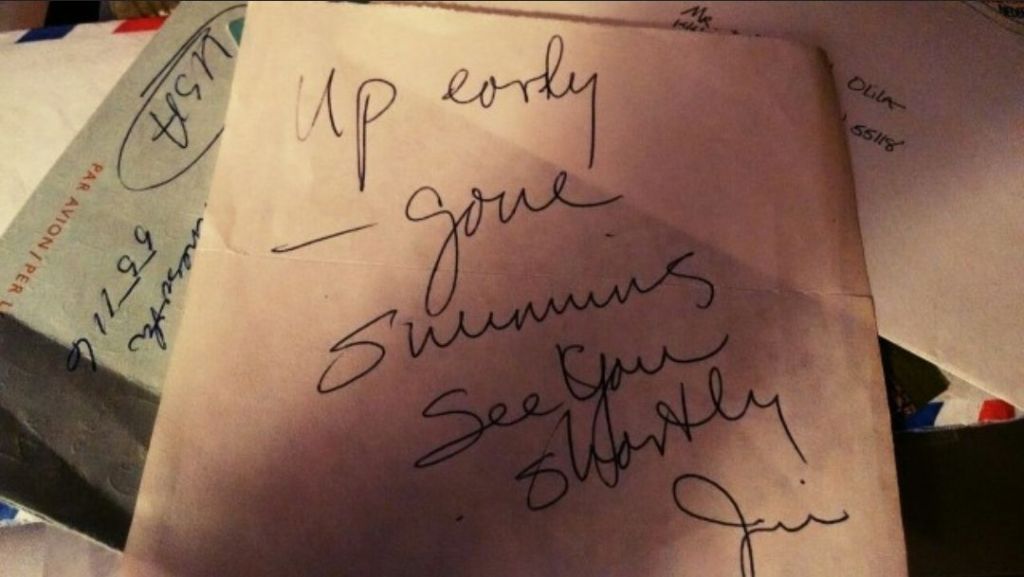
My takeaway? “Carpe diem, quam minimum credula postero” (“Seize the day, trusting as little as possible in the future”). Also, don’t put off until tomorrow what you can do today. Of course, one must make hay while the sun shines. We know not what tomorrow will bring–the wise build their future today.
Those same wise folks advise–live here in this very present moment, here is where the magic happens—through fleeting time–the future belongs to everyone. And I ask you, what else do we really have?
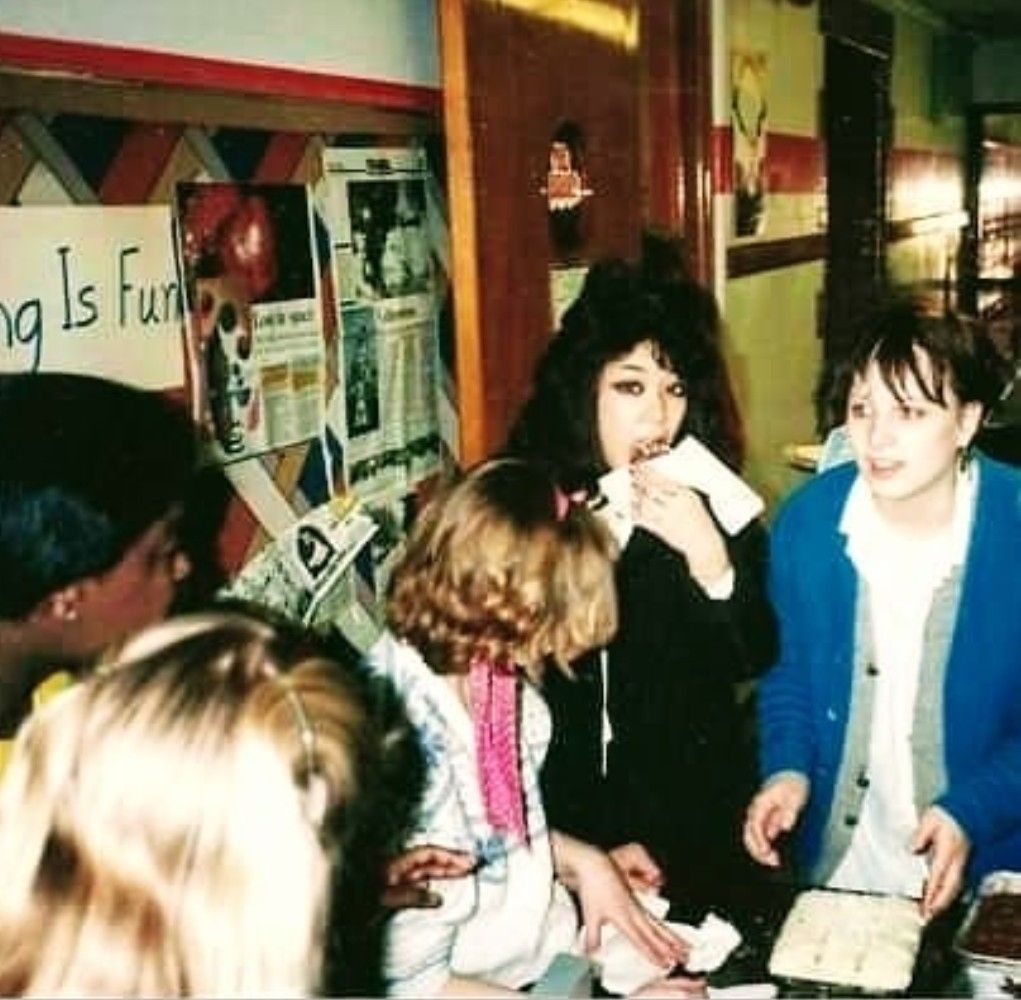
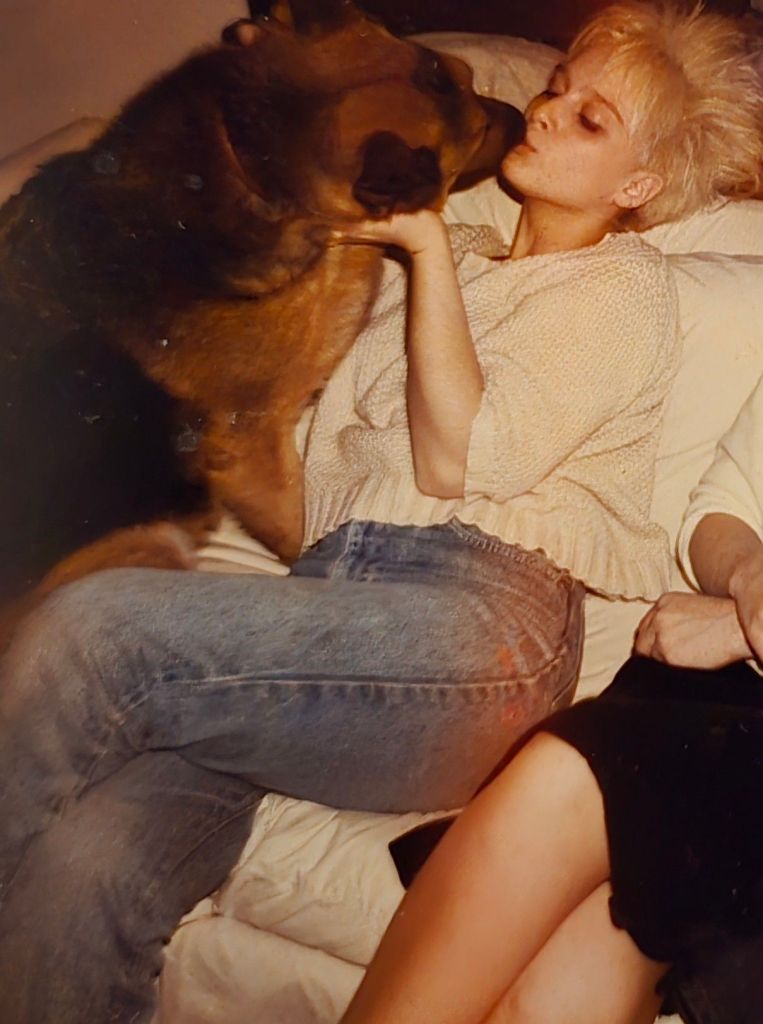
My look changed accordingly

Building the future
Forty plus years later—Hagen is still my go-to when I need my overactive imagination and ruffled spirit to be at once blasted and soothed. Now more than ever, I recognize that living in the present, is far from straightforward, rather it is a grave and challenging undertaking–often excruciating–and yet, critical to building a future. Having lived through a myriad of significant socio-political upheavals, individual and collective traumas, Hagen’s oeuvre is a call to resist collapsing ourselves into the pains of the past or sitting idly by while today comes and goes. Rather, we must–with great intention–set ourselves to work today, knowing that we are, in fact, building the future–and that the future belongs to everyone.
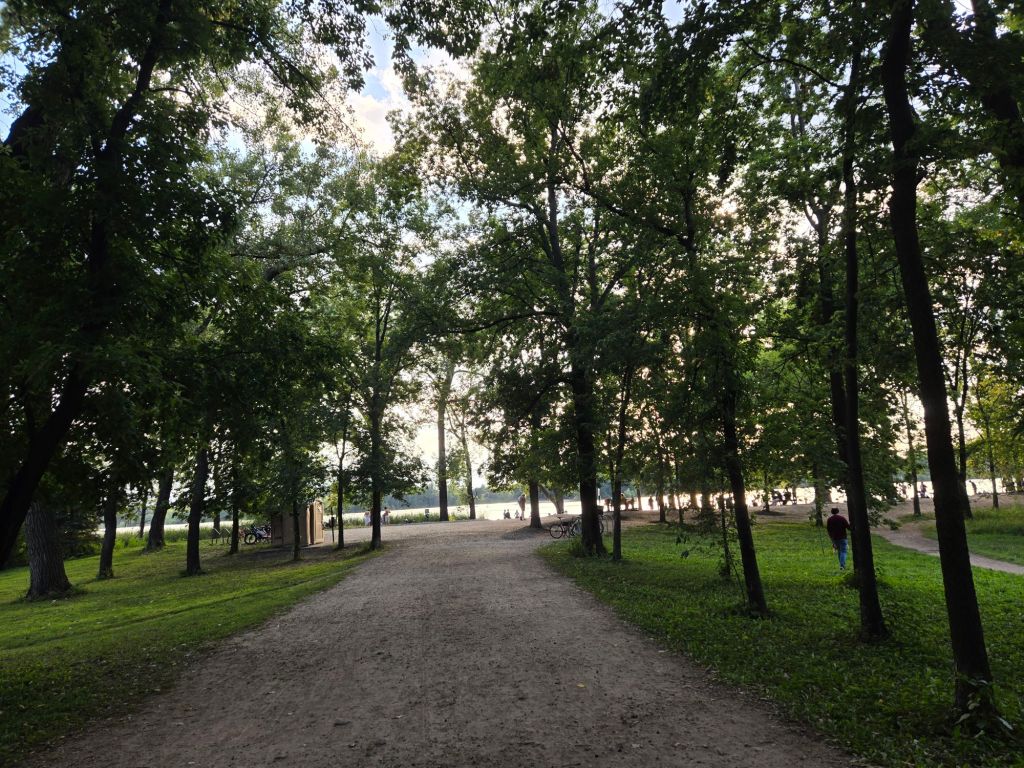
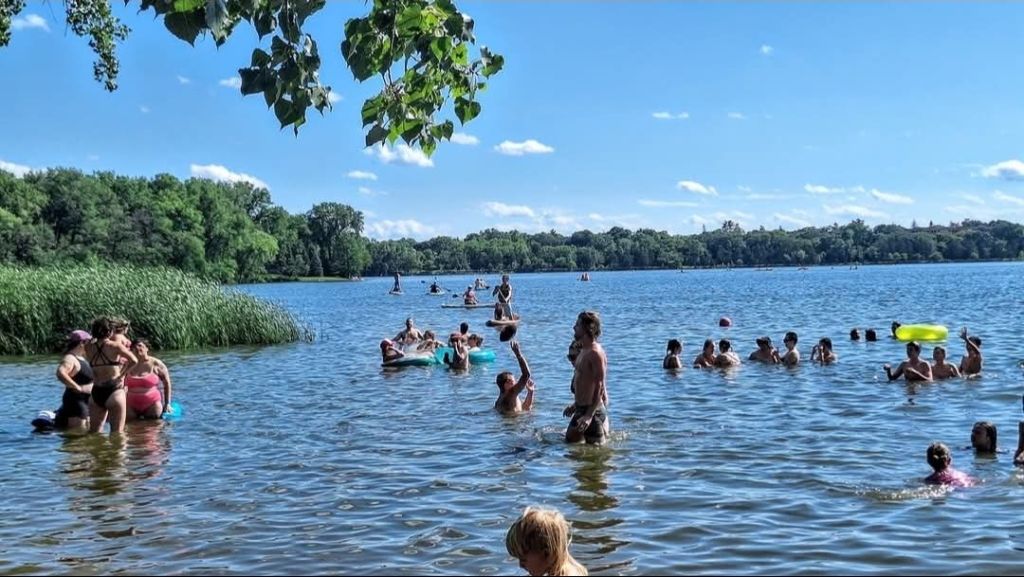
While August has passed (it is now September), I honored the 50th anniversary of my father stepping into the future by going swimming in the nearby lake. This is me letting the past be what it is, and stepping into the future by living in the true present. My hope is a stronger, better me–helping build a stronger, better future. See you shortly.

Future is Now – Live
 The L Spot Shop
Leave a comment